
Sea turtles have journeyed through the oceans for over 100 million years. They’ve outlived the dinosaurs, adapted to changing seas, and remained a symbol of endurance. But today, their survival is threatened by something as invisible as it is powerful—heat, not just in the oceans but also in the sands where their lives begin.
The temperature of the sand surrounding a sea turtle nest does more than incubate eggs. It decides whether hatchlings will emerge male or female. A few degrees warmer or cooler can shift that balance entirely. As heat waves intensify and global temperatures rise, nests are becoming hotter and increasingly female.
This isn’t just about turtles. It’s about what kind of stewards we want to be for the planet. That’s why those who support sea turtle research, including scientists, volunteers, community leaders, and everyday citizens, are stepping up to ensure that sea turtles survive and thrive. This story is about resilience, science, and hope. It’s about paying attention, taking action, and protecting one of Earth’s most ancient and vulnerable creatures.

Understanding Sea Turtle Reproduction and the Role of Temperature
How Temperature-Dependent Sex Determination Works
Unlike humans, who inherit their biological sex from chromosomes, sea turtles rely on their environment. Temperature-dependent sex determination (TSD) is the process through which the warmth of the sand during incubation determines the sex of the hatchlings.
The science is delicate. Sand temperatures around 29°C (84°F) tend to produce an even mix of males and females. A nest just one or two degrees warmer may yield nearly all females, while cooler sand brings more males. For millennia, natural variation across nesting sites has kept populations balanced. But now, that balance is unraveling.
With warming temperatures, the scales are tipping. Hatchlings are overwhelmingly female, and climate, instead of nature’s rhythm, is shaping entire generations. It’s not just about biology. Extremes are now distorting a system that once relied on subtlety.
The Thermal Threshold: Finding the Sweet Spot
A narrow range of sand temperatures called the pivotal temperature leads to balanced sex ratios. The closer the nest stays to this thermal sweet spot, the more likely it is to produce a sustainable mix of male and female turtles.
But the margin is slim. A shift of even half a degree can lean a nest’s outcome heavily in one direction. And with global warming tightening its grip, many nesting beaches are crossing that threshold more frequently. Instead of balance, there’s a growing divide.
The science behind TSD isn’t new, but its urgency is. When the pivotal temperature is exceeded repeatedly, season after season, the repercussions ripple across generations. One hatchling may seem like a small loss, but when the majority are born female, the entire reproductive chain weakens.

The Impact of Heat Waves on Nesting Beaches
Why Hotter Sand Means More Females
Rising temperatures change the environment. On nesting beaches, even small increases in sand temperature can have a big impact. Nests that used to produce a good mix of hatchlings are now mostly, if not entirely, female.
In some areas, sex ratios have reached nearly 99% female. This change threatens the population’s ability to survive. While females are crucial for reproduction, having too few males means fewer fertilized eggs, leading to fewer turtles in the future.
This problem is not limited to one area. It’s a global issue that’s getting worse. Climate change and environmental damage are turning ancient nesting sites into places where nature is out of balance.
Climate Change and the Escalation of Nest Temperatures
The world is getting warmer, and the sand is showing the effects. Longer summers, stronger heat waves, and changing weather make it harder for turtle nests to stay at safe temperatures.
When the sand gets too hot, problems arise. Turtle embryos might not develop properly. Hatchlings that make it out may be weaker, slower, and less likely to survive their journey to the sea. This results in not just fewer male turtles but fewer turtles overall.
Urban development near beaches makes the situation worse. Buildings, roads, and other structures absorb and reflect heat, raising the temperature of the sand. Human activities make survival more difficult for turtles each year.
Monitoring Nest Temperatures: The New Frontier in Sea Turtle Research
Inserting Temperature Loggers in Nests
Researchers are turning to tools that can tell them exactly what’s happening under the surface to respond to a changing world. One of the most effective is the temperature logger, a small data-gathering device gently placed into sea turtle nests.
These devices track the temperature hour by hour, day by day, throughout the incubation period. The data they collect provides a clearer picture of the conditions of the eggs and how those conditions might influence hatchling outcomes.
The process is subtle but powerful. It allows scientists to identify nests at risk, compare conditions across regions, and predict the likely sex of the hatchlings before they emerge. It turns instinct into information. And information into action.
What the Data Tells Us
Over time, the data reveals patterns where temperatures rise fastest, which beaches produce fewer males, and which areas need the most urgent intervention. It’s a window into a species’ future.
Patterns show that on many nesting beaches, male hatchlings are becoming rare. Some sites produce female-only generations year after year. But there’s cautious optimism in places where temperature interventions have been tested. Even small shifts in temperature can help restore the balance.
Adaptation Tactics: How Scientists Are Responding
Nest Shading
One effective approach is nest shading. Using simple materials like cloth canopies or palm fronds, conservation teams are reducing the direct sunlight on nests. This cooling technique can lower sand temperatures by several degrees, enough to shift the hatchling sex ratio toward a healthier balance.
Shading is practical, scalable, and immediate. It doesn’t disrupt the nesting process. It simply protects what’s already there. It’s a quiet intervention that’s already showing promise on beaches battling extreme heat.
Nest Relocation
When shading isn’t enough, relocation becomes necessary. Some nests are carefully and precisely moved to cooler parts of the beach, higher elevations, or even artificial hatcheries where conditions can be more closely controlled.
The process is delicate. Timing is everything. Moving eggs too late can harm the developing embryos, and relocating to the wrong environment can introduce new risks. But when done right, relocation can save entire clutches from being lost to heat.
Artificial Hatcheries as Safe Zones
Artificial hatcheries provide a controlled environment for vulnerable nests. These enclosed areas mimic natural conditions while shielding eggs from the elements, predators, and temperature extremes.
In areas hardest hit by heat waves, these hatcheries act as safe zones, preserving genetic diversity and giving researchers a consistent place to monitor hatchling development. They are becoming an essential tool in the fight to stabilize populations.
Why Sex Ratios Matter for Long-Term Survival
A Population Without Enough Males
Nature relies on balance. In sea turtle populations, an extreme shortage of males can lead to lower fertilization rates, reduced genetic diversity, and an increased risk of long-term decline.
If this imbalance continues, some populations may collapse not because there are too few turtles overall but because there are too few to reproduce effectively. A future where hatchlings emerge but can’t carry their species forward is not sustainable.
Avoiding the “All-Girl Generation” Crisis
The concern is real: the creation of “all-girl generations” with no male counterparts. Without action, this trend could become the norm in regions already experiencing high temperatures.
Preventing this outcome requires both awareness and proactive measures. Protecting beaches, monitoring nests, and intervening where necessary is not about overstepping nature. It’s about giving nature a fighting chance to correct itself.
Global Examples of Heat’s Impact on Sea Turtles
Australia’s Great Barrier Reef
Researchers in northern Australia found that over 99% of hatchlings from some green sea turtle populations are female. This discovery led to changes in conservation methods, such as new shading techniques and better data collection. The work has become a global example of how science can lead to quick actions to address urgent threats.
Florida’s East Coast
Similar patterns have been seen on the southeastern coast of the United States. Many nests still have more female turtles, but there are signs of improvement. Cooler seasons and increased help may be starting to change this trend, giving hope to future generations.
There is still a lot of work to do, but this shows that informed and strategic actions can make a real difference, even with global climate challenges.
How Public Support Makes a Difference
Supporting Sea Turtle Research Through Awareness
Every data logger, shaded nest, and relocated clutch requires support. From community donations to advocacy, research needs a foundation built not just on funding but also on public understanding.
Sharing these stories, participating in educational programs, and supporting research organizations ensures this critical work continues. This is not a spectator moment. It’s an opportunity for collective impact.
Citizen Science and Beach Monitoring
Public involvement doesn’t end with awareness. Across many coastlines, volunteers help track nesting activity, collect temperature data, and protect hatchlings during their first steps to the sea.
Their presence on the beaches strengthens scientists’ work and amplifies conservation efforts. It’s one of the most direct ways people can contribute: showing up, learning, and acting.
A Season of Progress: New Insights from the 2024 Nesting Season
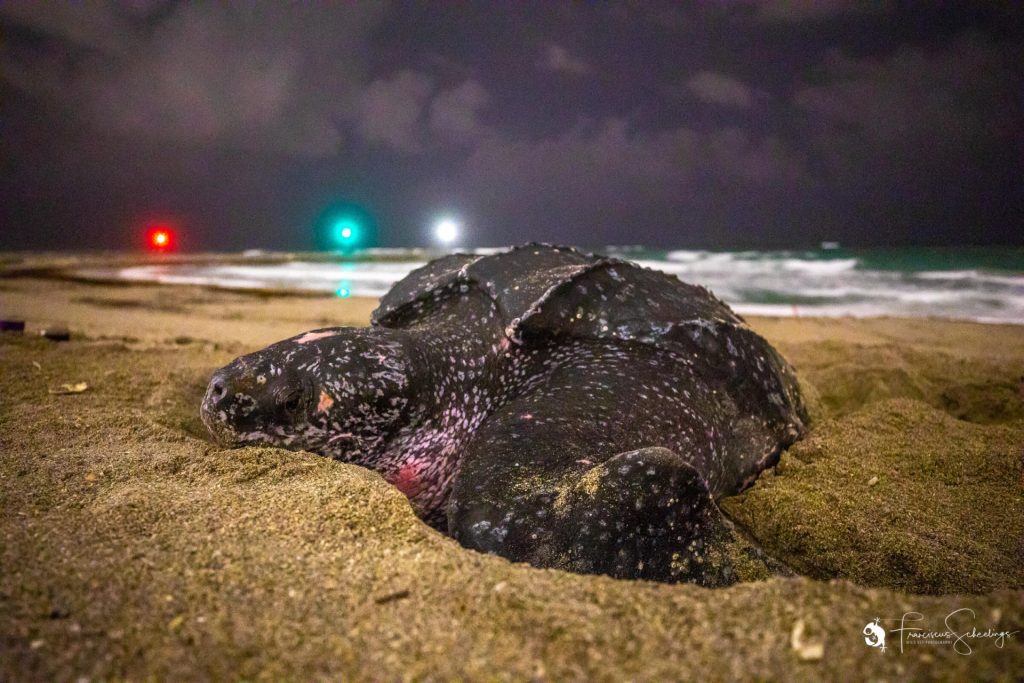
The end of the 2024 nesting season in South Florida marked an important step forward for sea turtle conservation. This year, researchers tracked the temperature of nests for the three main nesting turtle species: leatherback, loggerhead, and green turtles. The study collected data from 14,951 nests, providing one of the most detailed looks at environmental conditions and turtle behavior.
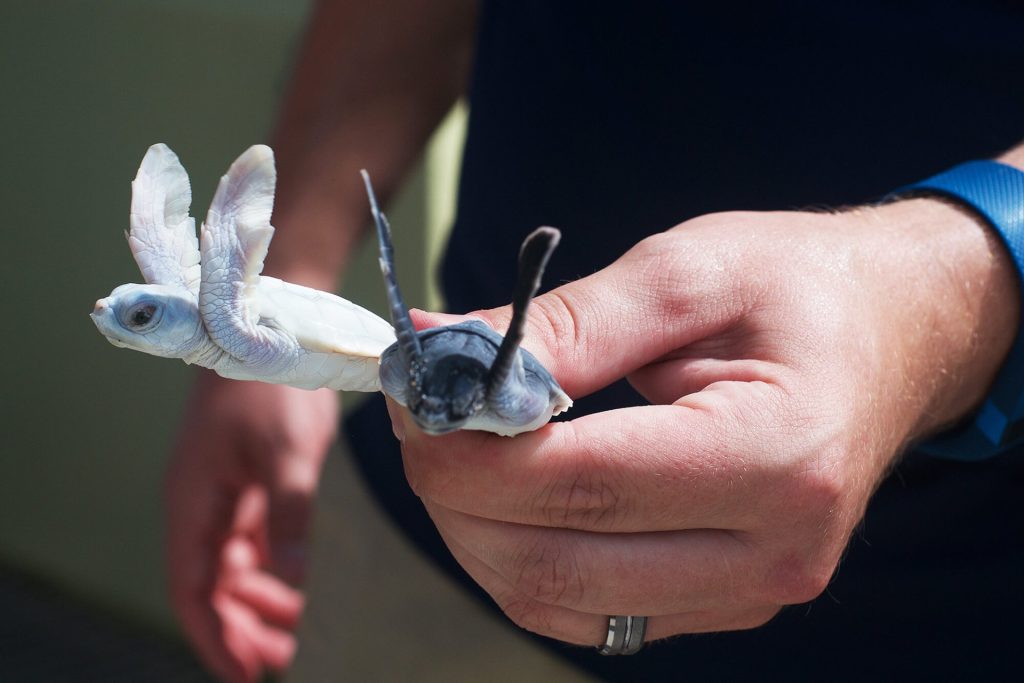
The temperature monitoring project has found patterns that could offer some hope. Early data shows that some male hatchlings are produced for leatherbacks and greens. This is an important change after years of almost all female hatchlings. This small shift indicates the positive impact of our ongoing adaptation and monitoring efforts.
Beyond sex ratios, temperature data revealed important details about how hatchlings survive. High nest temperatures can cause developmental stress, lower emergence rates, and reduce hatchling strength. By understanding these factors, researchers can determine which conditions create the strongest and healthiest young turtles. This information can help protect turtle populations and the health of individual turtles right from birth.
The findings from the previous nesting season show that researchers can effectively tackle today’s challenges and prepare for future ones when they have the right tools.
Plan Your Visit and Support Sea Turtle Research!
Sea turtles are resilient, but they can’t fight this alone. Their future depends on science, community, and action. By supporting sea turtle research at Loggerhead Marinelife Center, we protect a species and preserve a story that began long before us and deserves to continue long after.
To learn more, visit the team leading this vital work, discover how you can contribute, and see the impact of science and stewardship in action.
Plan your visit to Loggerhead Marinelife Center and become part of the effort to protect these extraordinary creatures.