
This year, sea turtle nesting season has extra significance for our research team, as it marks the 25th anniversary of Loggerhead Marinelife Center’s “The Leatherback Project” saturation tagging study. In this post, we will share the history of this vital project and a glimpse into what the research looks like in action. This will be the first in a series of posts about “The Leatherback Project” this summer!
First, what is a saturation tagging study you ask? It is an approach where our team aims to tag every leatherback individual encountered within a specific project area during nesting season. That area is Juno and Jupiter beaches for the LMC team, and they are attempting such a massive endeavor for good reasons. This type of study allows the team to estimate the population size, clutch frequency (how many nests they lay), remigration intervals (how many years between nesting events), and site fidelity (loyalty to a certain area).
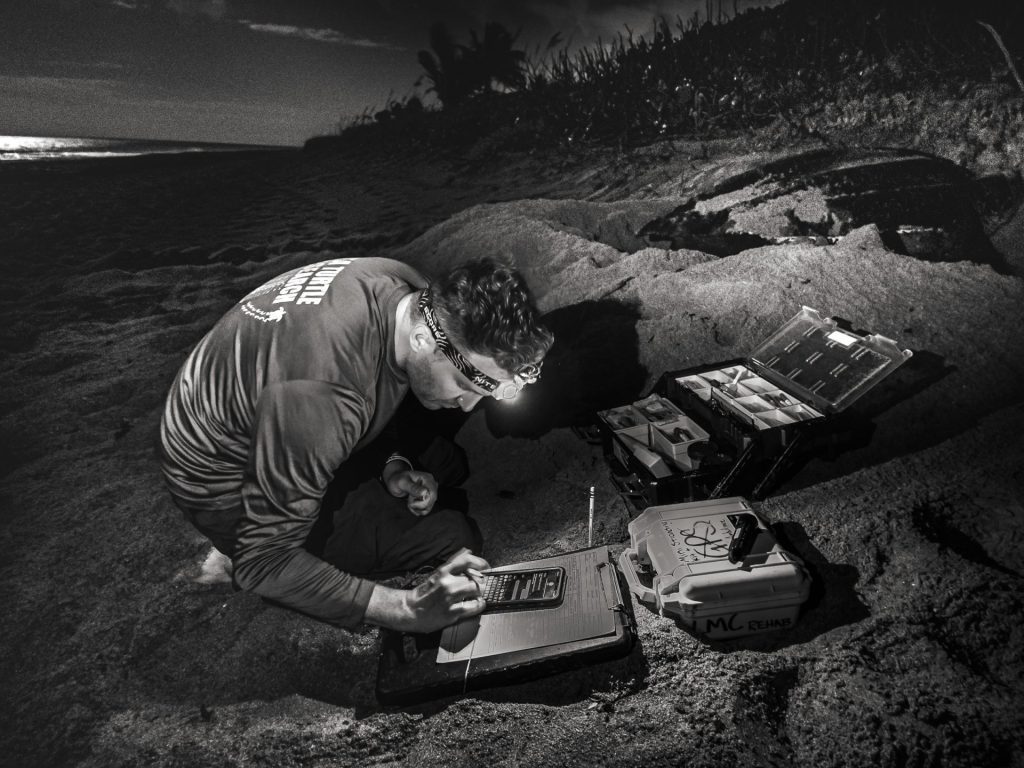
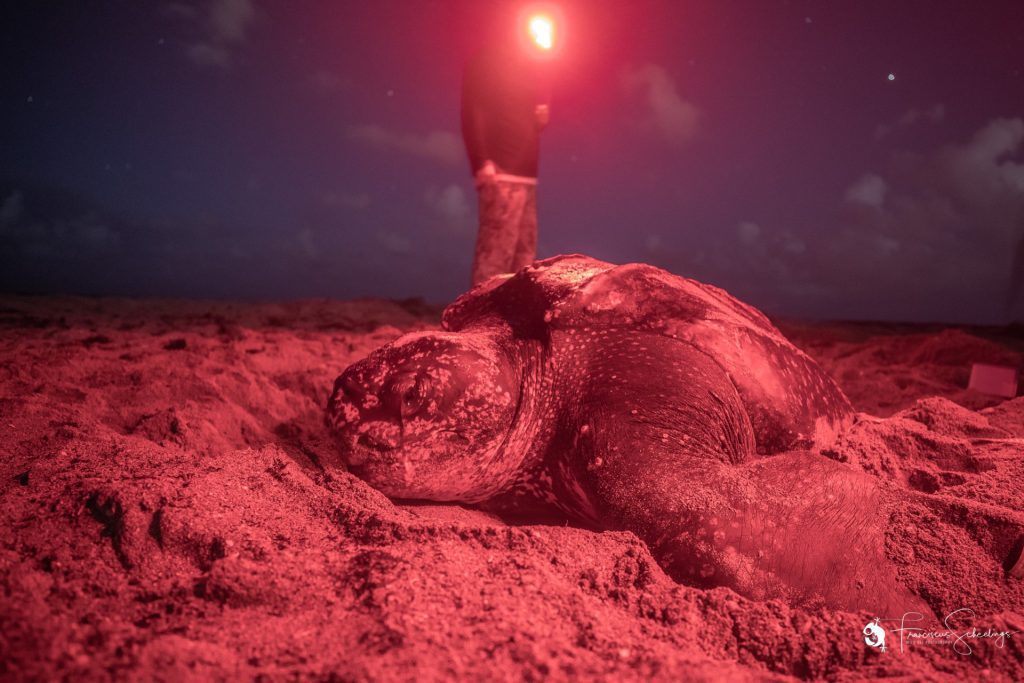
The LMC research team works tirelessly during a 10-week period to collect these data, starting the first week of April and wrapping up the second week of June. At least two teams drive the 7+ mile stretch of beach from the Jupiter Inlet to the northern boundary of John D. MacArthur State Park every 30 minutes starting at 9 pm until at least 3 or 4 am. Sometimes, the crew is on the beach until sunrise and end up greeting the morning nest survey team when they arrive. The team looks for these nesting leatherbacks emerging from the water or for their “tractor trailer width crawls” as Dr. Perrault likes to describe it.
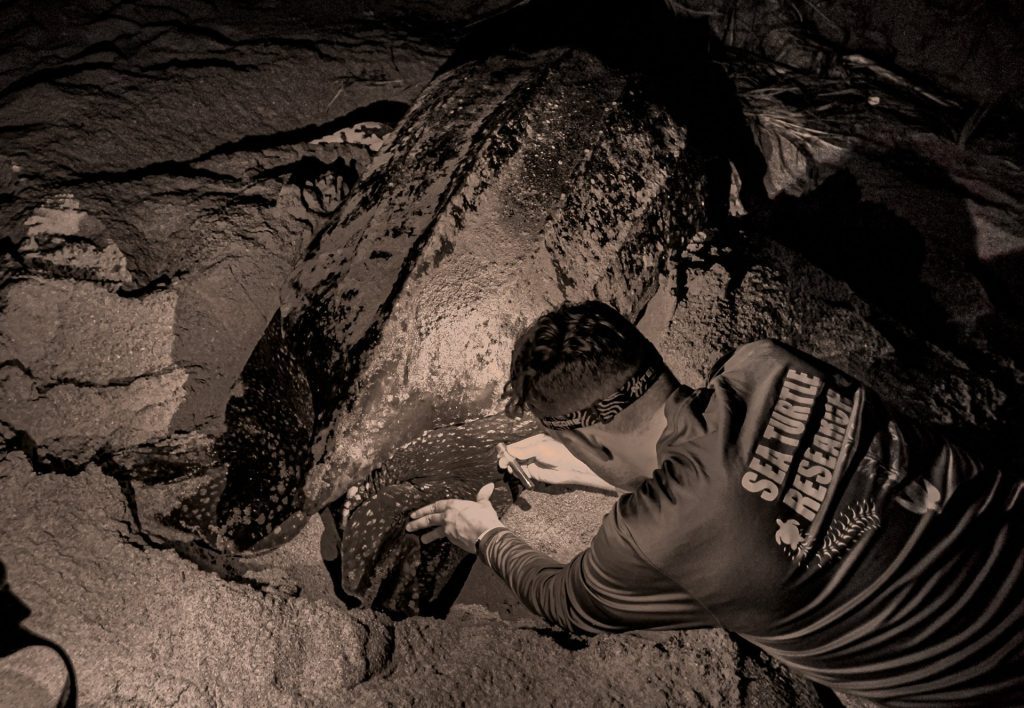
Once the team encounters a leatherback, they spring into action. The team has between 10–20 minutes to gather their information while carefully avoiding influencing the turtle’s behavior. First, she is identified using a PIT tag, which is a passive integrated transponder (similar to the microchips used in domestic pets) and external flipper tags. Then the turtle is measured, sometimes weighed, and sampled for numerous internal and external (student-led, collaborator-led) research projects. Complete physical assessments are conducted including her body condition (how thin or robust is she?), documentation of all injuries, and any other abnormalities noted. If the team happens to encounter a new leatherback with no previous tags, they also tag (and name) the animal for future studies.
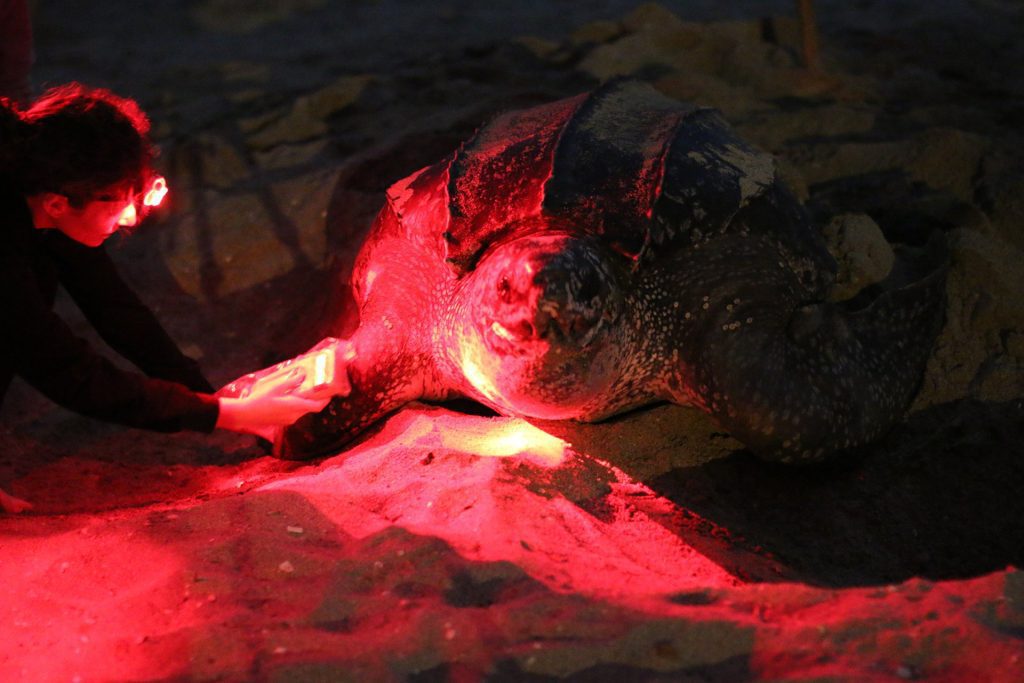
In this photo a member of the night research team uses a PIT tag scanner to identify this nesting leatherback.
Dr. Justin Perrault, who heads up this research for LMC, says that one of the most exciting parts of the project is the rare opportunity to build decades-long connections with some of these animals. He said, “One individual named ‘Juno’ was first encountered in 2001 and has returned to LMC-monitored beaches nearly 30 times since her initial encounter, allowing us to witness her resilience, track her life history, and teach future generations of scientists through her story. Each time she returns offers a new chapter in her journey – often marked by fresh injuries from interactions with boats or fishing line, yet she always returns. Her story, like many other leatherbacks, is a powerful reminder of both the fragility and tenacity of these animals, and for myself personally, the chance to see an old ‘friend’ again. These experiences never get old.”

In our next post, we will share more on the particular leatherbacks our team has encountered, surprising insights into the lives of these massive animals, and how this research is promoting conservation efforts worldwide.