Sea turtles are fascinating creatures that have roamed our oceans for millions of years. These ancient mariners are known for their grace in the water and remarkable life cycle, taking them on incredible journeys across vast oceanic expanses.
Understanding the life cycle of sea turtles provides insight into their behaviors, challenges, and the efforts needed to protect these magnificent animals. For families looking to connect with nature and learn more about these gentle giants, a family-friendly sea turtle experience offers a unique and memorable opportunity.
In this guide, we’ll explore the stages of a sea turtle’s life, from hatching to adulthood, and their critical role in marine ecosystems.

The Life Cycle of Sea Turtles
The life cycle of sea turtles is a mesmerizing journey that spans decades, beginning on sandy beaches and continuing through the vast expanse of the ocean. These incredible creatures follow a life cycle that involves multiple stages, each critical to their survival and development. The life of a sea turtle is a testament to the resilience of nature, from the moment they hatch on the beach to their long migrations across the seas. By understanding their life cycle, we can appreciate sea turtles’ challenges and the importance of conservation efforts to ensure their survival.
1. Nesting and Egg-Laying
The life cycle of a sea turtle begins with the nesting and egg-laying process, one of the most remarkable events in nature. Female sea turtles are known for their incredible ability to return to the exact beach where they were born, a phenomenon called natal homing. This return journey, which can span thousands of miles, is guided by the Earth’s magnetic fields, which the turtles use as a natural compass. Once a female turtle arrives at her natal beach, she typically waits until nightfall to nest.
Using her flippers, the female digs a deep hole in the sand, known as a nest cavity, where she will lay her eggs. This process can take several hours and requires significant effort as she must carefully shape the nest to ensure it is deep and secure enough to protect the eggs. Once the nest is ready, the female turtle enters a trance-like state and begins laying her eggs, which can number between 80 and 120 in a single nest. After laying, she covers the eggs with sand, disguising the nest from predators and helping to regulate the temperature. Exhausted, she returns to the ocean, leaving the eggs to incubate and develop independently.
2. Incubation Period
Following the nesting process, the eggs enter an incubation period that typically lasts around 60 days, but this can vary depending on environmental conditions. During this time, the eggs remain buried in the sand, where the temperature plays a crucial role in determining the sex of the hatchlings. This process, known as temperature-dependent sex determination, is unique to reptiles and vital for maintaining balanced populations.
Warmer sand temperatures produce more female hatchlings, while cooler temperatures result in more males. This natural mechanism allows sea turtle populations to adjust to changing environmental conditions. However, it also makes them vulnerable to the effects of climate change, which can skew sex ratios over time. The developing embryos gradually grow and mature throughout the incubation period, transforming from tiny, undeveloped embryos into fully formed baby turtles.
3. Hatching and Emergence
As the incubation period ends, the hatchlings are ready to emerge from their eggs and begin their journey to the ocean. This stage is awe-inspiring and difficult, as the tiny turtles must work together to break free from their shells and dig their way to the surface. Using a small, sharp tooth called a caruncle, the hatchlings crack open their eggs and begin digging through the sand, which can take several days.
Hatchlings typically emerge at night, when the cooler temperatures and darkness offer some protection from predators. The sight of hundreds of baby sea turtles crawling toward the ocean is a powerful reminder of the beauty and fragility of life. However, this journey is fraught with danger. Predators such as birds, crabs, and even larger fish are looking for an easy meal, making this one of the most vulnerable stages in a sea turtle’s life. Despite these challenges, the instinct to reach the ocean drives the hatchlings forward, with only a small percentage making it safely to the water.
4. The Frenzy Period
Upon reaching the ocean, the hatchlings enter what is known as the frenzy period. In this critical phase, they must swim continuously for up to 24 hours to escape the dangers of the nearshore environment. This intense burst of energy is essential for their survival, as it propels them away from the coast and into the relative safety of deeper waters. The frenzy period is named for the frantic, nonstop swimming the hatchlings must undertake to avoid predators that patrol the shallow waters near the beach.
During this time, the hatchlings rely on the energy reserves from their yolk sacs, which provide them with the necessary nutrients to sustain this demanding activity. The goal of the frenzy period is to reach the open ocean, where the hatchlings can disperse into the currents and begin the next stage of their life. The strong swimming instincts exhibited during the frenzy period are vital for the hatchlings’ survival, as they must quickly distance themselves from the dangers of the shore and integrate into the pelagic zone, where they will spend the next few years.
5. The Lost Years
After the frenzy period, sea turtles enter a mysterious and poorly understood phase known as the “lost years.” This term refers to the period when young sea turtles disappear into the open ocean, drifting with the currents and remaining largely out of sight. The lost years can last anywhere from several months to a decade, depending on the species, and are so named because researchers know relatively little about this stage due to the difficulty of tracking these small, elusive creatures in the vast ocean.
During the lost years, young turtles are believed to follow oceanic currents, such as the Gulf Stream, which carry them across great distances. They spend this time feeding on a diet of plankton, jellyfish, and other small marine organisms, growing steadily as they prepare to return to coastal waters. The lost years are a time of significant growth and development, with the young turtles gradually increasing in size and strength. This stage is crucial for their survival, as it allows them to reach a size that offers better protection against predators when they eventually migrate back to coastal habitats.
6. Juvenile Stage
As sea turtles grow and become stronger, they transition from the open ocean to coastal areas, where they enter the juvenile stage of their life cycle. A shift in behavior and diet marks this stage as juvenile turtles begin to adopt the habits that will characterize their adult lives. In coastal waters, juvenile sea turtles feed on a diverse diet that includes algae, seagrass, crustaceans, mollusks, and other marine organisms. This diet is essential for their continued growth and health, providing the nutrients needed to build muscle, shell, and bone.
The juvenile stage is also a time for turtles to establish territories and learn the patterns of the coastal ecosystems they inhabit. They become more active during the day, foraging for food and exploring their surroundings. This stage can last several years, with the turtles growing steadily as they prepare for adulthood. Juvenile sea turtles are more mobile and less vulnerable than hatchlings but still face threats from predators, human activities, and environmental changes.
7. Maturity and Migration
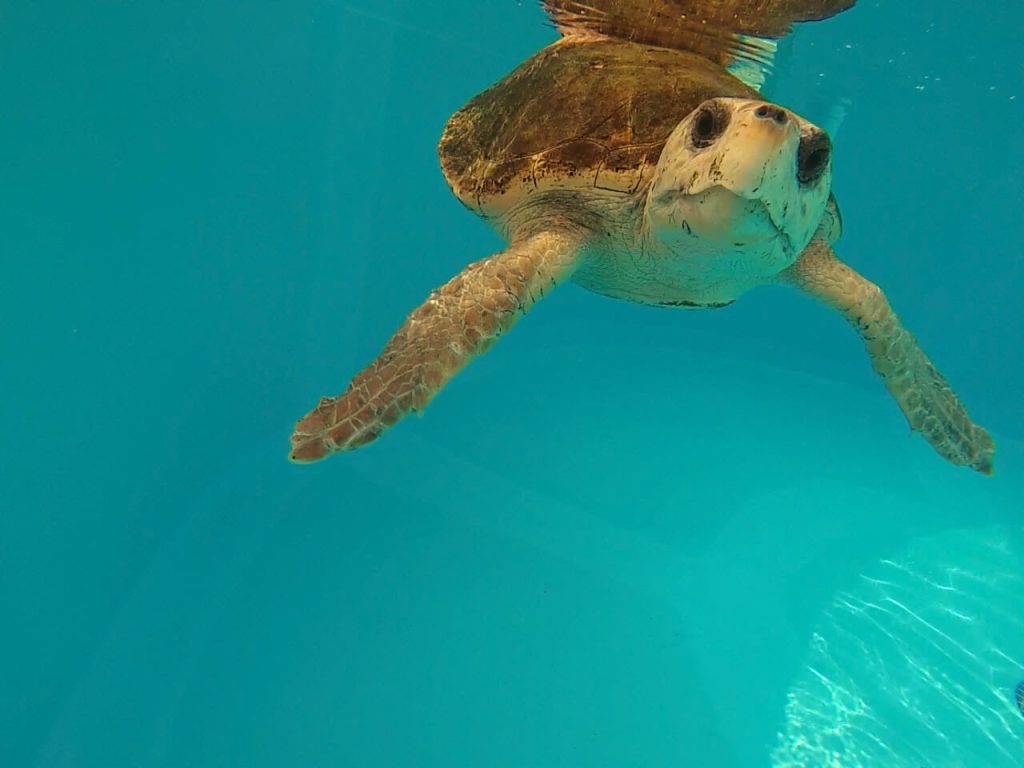
After years of growth and development, sea turtles reach sexual maturity, a significant milestone in their life cycle. The age at which sea turtles mature varies by species, ranging from 10 years for some species to 50 years for others. Once they reach maturity, sea turtles begin the long migrations that are a hallmark of their species. These migrations, which can cover thousands of miles, take turtles from their feeding grounds to their nesting beaches, where they will reproduce and continue the cycle of life.
Sea turtles are known for their incredible navigational abilities, using the Earth’s magnetic field as a natural compass to guide them on their journeys. Their migration routes are among the longest in the animal kingdom, with some species traveling across entire ocean basins to reach their destinations. These migrations are essential for the survival of sea turtle populations, as they ensure genetic diversity and allow turtles to find the best nesting sites and feeding grounds.
8. Mating and Reproduction
Mating in sea turtles typically occurs in the ocean, near the nesting beaches. During the breeding season, male sea turtles migrate to the same areas as females, competing to mate. Mating can be a challenging and competitive process, with males often engaging in aggressive behaviors to secure a mate. Once a male successfully mates with a female, she can store his sperm and use it to fertilize multiple eggs over the nesting season.
After mating, the female sea turtle begins the cycle of nesting and egg-laying, returning to the beach to lay her eggs. The reproductive process is energy-intensive and requires the female to travel great distances between feeding grounds and nesting beaches. This mating, nesting, and migration cycle is repeated multiple times throughout a sea turtle’s life, with females often returning to the same beaches year after year to lay their eggs. The ability to reproduce successfully is a key factor in the survival of sea turtle populations, making the protection of nesting beaches and feeding grounds essential for their conservation.
The Role of Sea Turtles in Marine Ecosystems
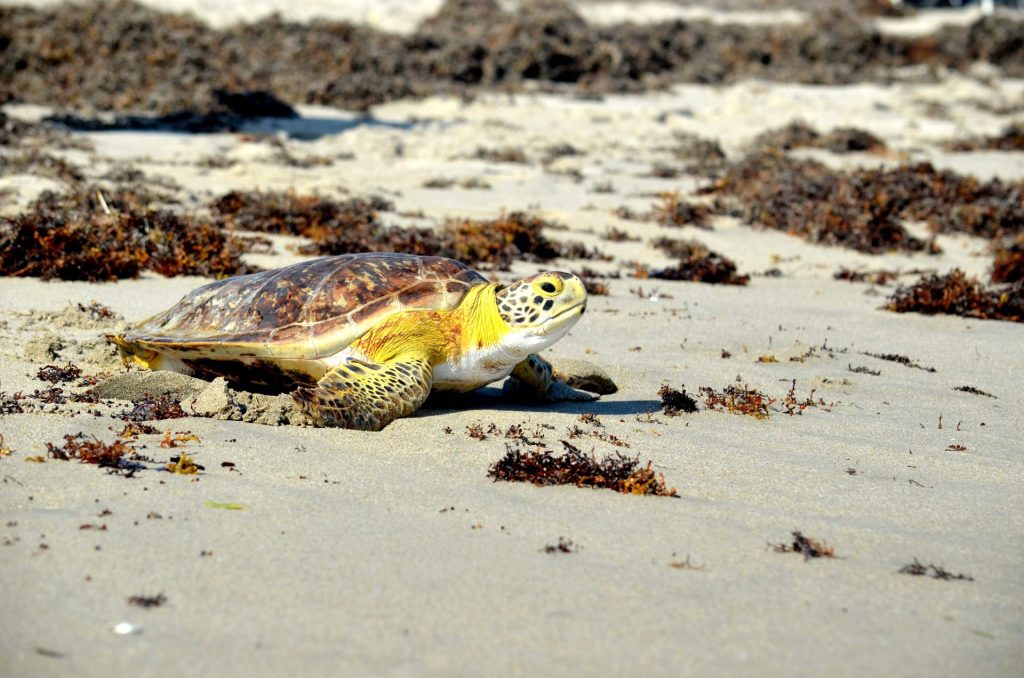
Sea turtles play a vital role in maintaining the health of marine ecosystems. As they feed on seagrass, they help keep the seagrass beds healthy and productive, supporting a diverse array of marine life. Their feeding habits also help control the population of jellyfish and other prey species, preventing overpopulation and maintaining a balanced ecosystem. Additionally, the nutrients from their eggs and hatchlings that don’t survive nourish beach ecosystems.
Threats to Sea Turtle Survival
Despite their importance to marine ecosystems, sea turtles face numerous threats that endanger their survival. Habitat loss, pollution, climate change, and bycatch in fishing gear are some of the primary challenges they encounter. Coastal development often destroys nesting beaches, while plastic pollution poses a severe risk, as sea turtles can mistake plastic for food. Climate change affects the temperature of nesting beaches, which can skew sex ratios and impact future populations.
Conservation Efforts and How You Can Help
Conservation efforts are crucial to the survival of sea turtles. Organizations worldwide are dedicated to protecting these ancient mariners through research, rehabilitation, and education. Individuals can contribute to protecting sea turtles and their habitats by supporting conservation initiatives, participating in beach cleanups, and making sustainable choices. Every small action can make a difference in ensuring that these magnificent creatures continue to thrive in our oceans.
Visit Loggerhead Marinelife Center for a Family-Friendly Sea Turtle Experience!
Sea turtles go through an amazing life cycle that shows how strong and wonderful nature is. They hatch, travel long distances in the ocean, and can adapt and survive in a changing world. But their survival is not guaranteed. It’s up to us to protect their homes and ensure their continued existence.
If you’re fascinated by the incredible journey of sea turtles, you should visit Loggerhead Marinelife Center. Here, you can learn about sea turtle conservation, watch injured turtles get better, and join educational programs that show why protecting these animals is important.
Your visit to the center supports its mission to save ocean ecosystems and make sure sea turtles survive for a long time. Whether you’re a local or a visitor, Loggerhead Marinelife Center is a place where you can learn, help protect, and have unforgettable experiences for all ages. We can all help ensure the future of these amazing creatures.