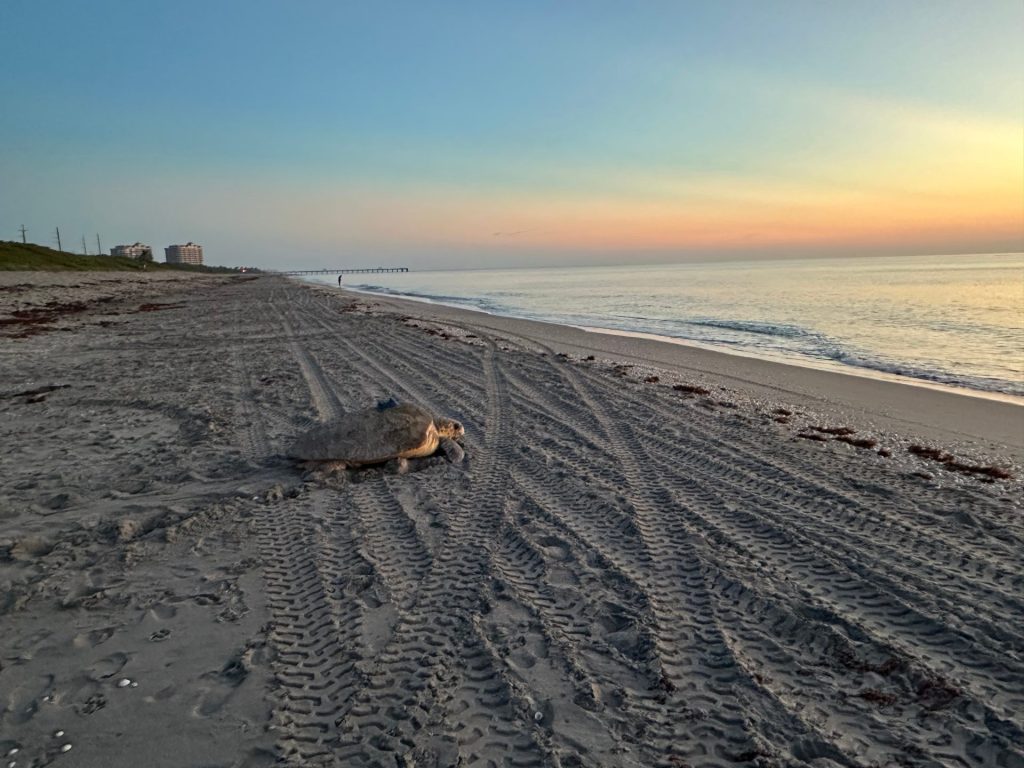

Researchers at Loggerhead Marinelife Center were ecstatic to find a loggerhead sea turtle nesting on south Juno Beach this season after not seeing “Rollins” in the area for three years. The loggerhead had been fitted with a satellite transmitter in April 2022, but batteries failed a year later, and Rollins’ whereabouts were unknown until she popped up again this April.
“On a beach that sees 15,000-plus nests a season, we certainly did not think when we started this project that we would ever re-encounter these animals again,” Sarah Hirsch, LMC’s Director of Research, said. “We figured it would be finding a needle in a haystack.”
Hirsch described the eventful night, April 27, that they spotted Rollins:
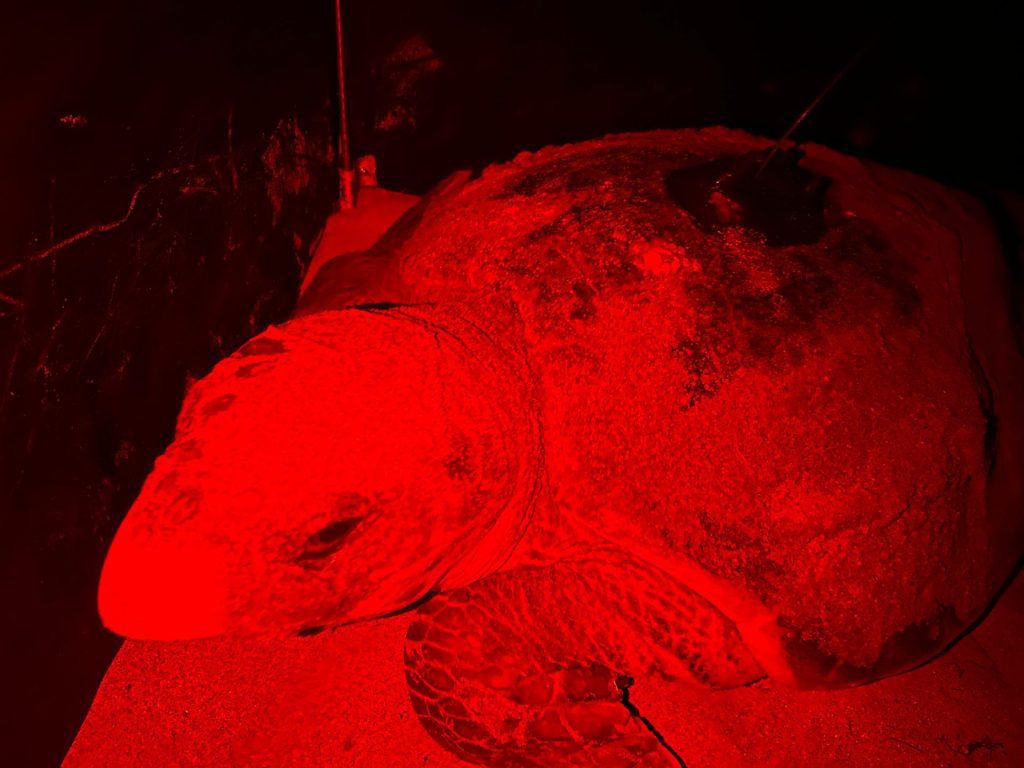
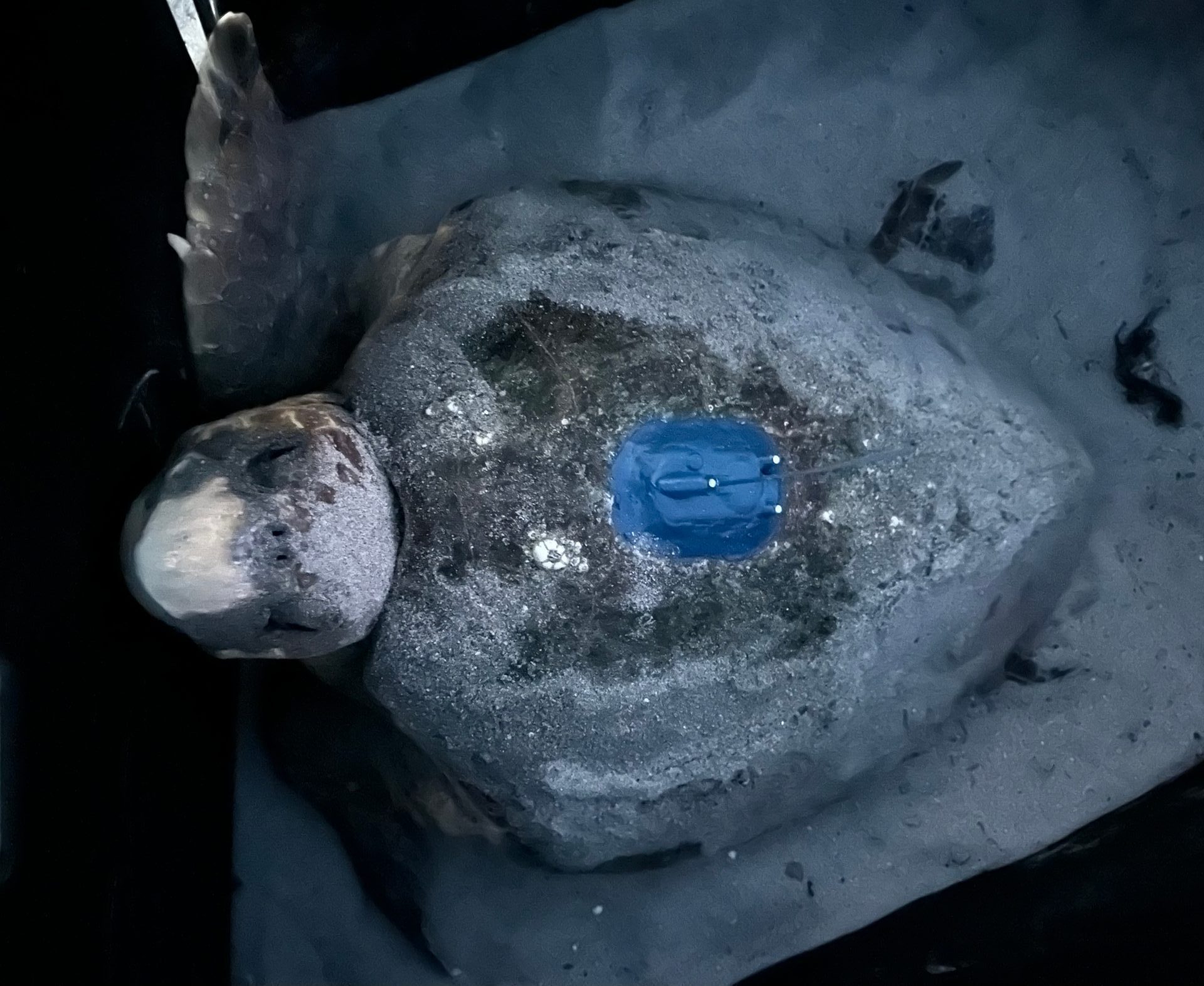
“We were out surveying and happened to notice a turtle with a satellite transmitter on her carapace (or top shell). So, we stopped and investigated. The turtle had flipper tags and a microchip tag that allowed us to identify her. The flipper tags are like a license plate number; they are an alphanumeric sequence unique to the turtle.”
The sea turtle didn’t find a suitable spot for her nest that night and ended up returning to the ocean without laying her eggs.
Hirsch said they figured Rollins would return in 12 to 13 days to try nesting again. Sure enough, they found her nest on May 10 and encountered her again on May 21, about 50 feet from her earlier nest. Hirsch and her colleagues watched Rollins return to the ocean at sunrise that morning.
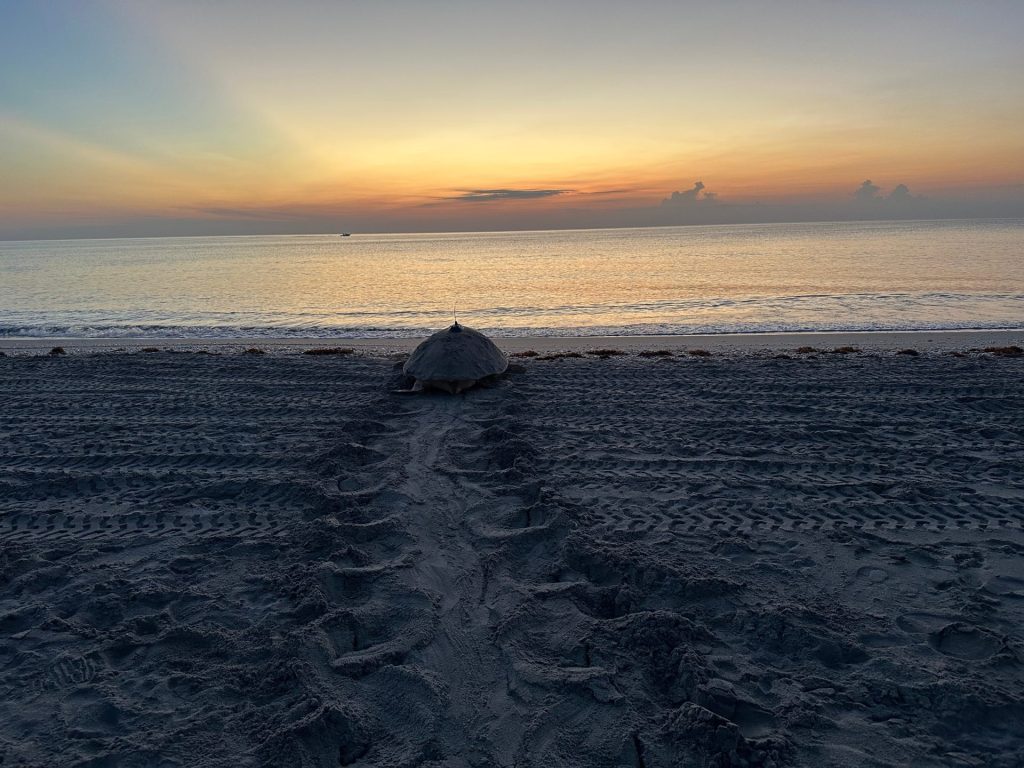
Transmitters help researchers track and study the migration and nesting patterns of sea turtles. Funds for the tracking device were received through a grant awarded by the Sea Turtle Grants Program, which gets its proceeds through sales of the Florida Sea Turtle license plate.
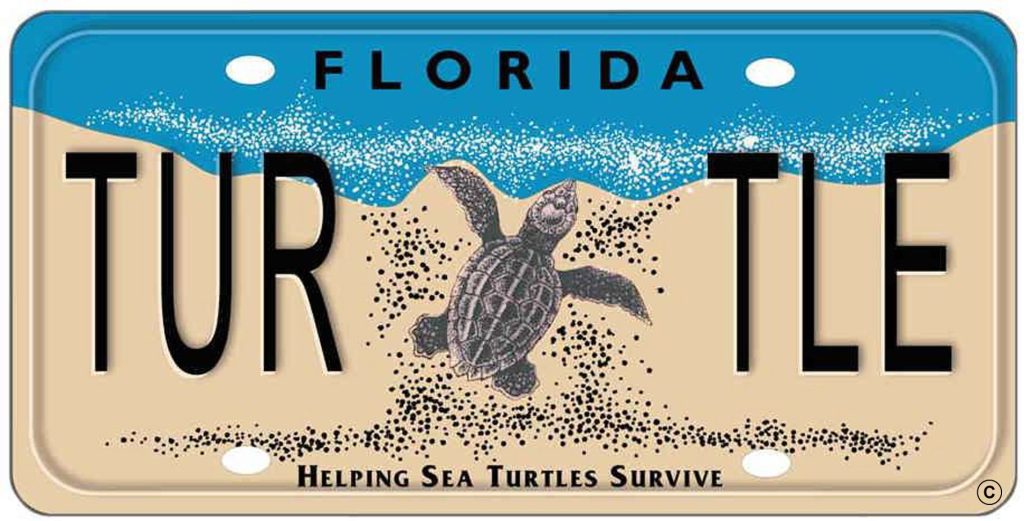
In 2022, Rollins laid six nests between April and late June, with about 120 eggs per nest. She then migrated north to her foraging grounds in the Chesapeake Bay to eat and rest, Hirsch said. She noted that sea turtles typically take two to three years off between reproductive cycles.
Rollins’ new satellite tag will allow LMC to follow her journey for the remainder of the 2025 nesting season and see if she travels back to Chesapeake Bay.