
Every time a loggerhead turtle glides through warm coastal waters or nests on a sandy beach, it reminds us how ancient and fragile our oceans are. These remarkable reptiles have been swimming Earth’s seas for over 100 million years. Today, though, their survival faces real challenges. From habitat loss to climate change, loggerheads need our help now more than ever.
Luckily, a sea turtle hospital in Florida is leading the way in giving these turtles a fighting chance. By learning about the threats loggerheads face and how conservation efforts work, we can all play a role in keeping these ancient mariners part of our world.

Understanding Loggerhead Sea Turtles: A Closer Look
What Makes Loggerheads Special?
Loggerhead sea turtles aren’t just another beautiful face in the ocean—they are truly one-of-a-kind creatures with fascinating traits and behaviors that set them apart. Here’s why loggerheads hold such a special place in the marine world:
1. Powerful Heads Built for Survival
Loggerheads are named for their massive, block-like heads—and for good reason. Their strong, muscular jaws allow them to crush the tough shells of crabs, conchs, and other hard-shelled prey. This specialized diet keeps them healthy and plays a big role in balancing marine ecosystems. Every time a loggerhead snacks on a crab or mollusk, it’s helping maintain the natural rhythm of the seafloor.
2. Wide-Ranging Ocean Travelers
These turtles aren’t homebodies. Loggerheads roam thousands of miles across subtropical and temperate oceans. They’re found in the Atlantic, Pacific, and Indian Oceans, journeying from feeding grounds to nesting beaches with an internal compass that seems almost magical. One of nature’s most impressive feats is their ability to navigate entire ocean basins without maps or GPS.
3. Florida: A Loggerhead Hotspot
While loggerheads live all over the world, Florida is their nesting paradise. About 90% of all loggerhead nesting in the United States happens right here in the Sunshine State. From Juno Beach to the Keys, Florida’s sandy shores are essential for the next generation of turtles. Every protected nest along these beaches is a tiny victory for the species.
4. The Miracle of Natal Homing
Perhaps the most breathtaking thing about loggerheads is their instinct to return to the exact beach where they hatched. This behavior, called natal homing, means that a female loggerhead born on a Florida beach decades ago will travel back across oceans just to lay her own eggs on that same stretch of sand. Scientists are still uncovering exactly how they pull off this incredible navigation, but one thing’s for sure—it’s an awe-inspiring cycle of life that deserves our care and protection.
Current Conservation Status: Are Loggerhead Turtles Endangered?
Loggerheads in the U.S.: Listed as Threatened
In the United States, loggerhead turtles are officially listed as threatened under the Endangered Species Act. This designation means they’re at risk of becoming endangered in the foreseeable future. It’s a serious status that triggers protective measures, monitoring, and research efforts focused on giving these turtles a fighting chance. Without these protections, loggerhead numbers could fall quickly.
The Global Picture: Vulnerable on the IUCN Red List
The International Union for Conservation of Nature (IUCN) classifies loggerheads as vulnerable worldwide. Vulnerable species aren’t yet critically endangered but are at risk, a warning sign that conservation efforts can’t slow down. Loggerheads may have ancient resilience, but the pressures they face today, from climate change to fishing nets, are stronger than ever.
Regions of Hope: Where Populations Are Improving
There’s some uplifting news: loggerhead nesting numbers are holding steady in the Northwest Atlantic Ocean and even showing small signs of improvement. Strong conservation programs, nest protections, and public awareness campaigns are making a real difference in places like Florida. It proves that recovery is possible when communities, scientists, and policymakers work together.
Areas of Concern: Populations Still at Risk
Unfortunately, not all loggerhead populations are faring well. In the Mediterranean Sea and parts of the Pacific Ocean, loggerhead numbers continue to struggle. Habitat loss, heavy boat traffic, intense fishing pressure, and pollution take a major toll. Without aggressive conservation strategies tailored to these specific regions, these turtles could become endangered or even disappear from those waters altogether.
Why “Threatened” Still Means Urgent Action
Being labeled “threatened” doesn’t mean loggerheads are safe. It means they’re at a tipping point. Every year counts. Without nesting beach protections, fishing gear improvements, pollution control, and climate action, their numbers could quickly slide in the wrong direction. Loggerheads can’t recover without our help—they need people, policies, and passion working on their side.

Why Loggerhead Turtles Are at Risk
1. Habitat Loss and Beachfront Development
Loggerheads depend on sandy, undisturbed beaches for nesting. But coastal development—homes, hotels, roads—has taken away or degraded many critical nesting areas. Bright lights from beachfront properties can disorient hatchlings, causing them to crawl inland rather than toward the ocean.
Even when beaches are accessible, human traffic can compact the sand, making it harder for females to dig nests or for hatchlings to emerge. If not done carefully, beach renourishment projects can also alter sand composition and temperature, affecting hatchling survival.
2. Fishing Gear Entanglement
Loggerheads often get caught unintentionally in commercial fishing operations—a phenomenon called bycatch. Longlines, trawl nets, and gillnets pose constant threats. Turtles trapped underwater in nets can drown quickly if they cannot reach the surface to breathe.
Although turtle excluder devices (TEDs) have been developed and implemented in many fisheries, accidental captures still happen. Even one encounter with fishing gear can cause serious injury, slow starvation, or death.
3. Climate Change
Rising global temperatures create a cascade of problems for loggerhead turtles. Sand temperature during incubation determines the sex of hatchlings—warmer sands produce more females. With beaches heating up, there’s growing concern that too few male turtles will hatch, skewing future populations dangerously.
Climate change also brings stronger storms, sea level rise, and shifts in ocean currents—all of which impact feeding grounds, nesting beaches, and migratory patterns. Loggerheads, resilient as they are, may not adapt fast enough without help.
4. Pollution and Marine Debris
Plastic pollution, oil spills, and chemical runoff contaminate the ocean habitat loggerheads call home. Turtles often mistake floating plastic bags for jellyfish, leading to ingestion that blocks their digestive systems and causes slow, painful deaths.
Debris like fishing lines and abandoned nets can entangle turtles, restricting their movement or cutting deep wounds into their flippers and shells. Even small amounts of pollution accumulate over time, creating large-scale impacts on marine ecosystems.
How Loggerhead Turtles Are Protected
1. Nesting Beach Protections
Many coastal areas now enforce strict lighting ordinances and beach preservation rules during nesting season. Conservation groups, like those partnering with local governments, patrol beaches, monitor nests, and help ensure that hatchlings have a safe passage to the sea.
Volunteer efforts, such as moving nests threatened by tides, shading nests to balance temperature, and rescuing disoriented hatchlings, make a measurable difference.
2. Fishing Regulations
Fisheries are required to use turtle excluder devices (TEDs) in shrimp trawls and follow bycatch reduction techniques. Research continues to improve fishing gear and practices to lessen impacts on non-target species like sea turtles.
Policy enforcement combined with cooperative work from fishermen shows that humans and marine life can coexist when thoughtful strategies are in place.
3. Rehabilitation Centers and Sea Turtle Hospitals
Sea turtle hospitals become lifelines when loggerheads are injured, sick, or stranded. Rehabilitation centers and sea turtle hospitals specialize in rescue, rehabilitation, and release programs. From emergency surgeries to long-term physical therapy, these facilities give turtles a second chance at life.
Successful recoveries save individual turtles and offer valuable research insights into threats, diseases, and effective treatments that can be used worldwide.

A Day in the Life at a Sea Turtle Hospital in Florida
1. Rescue and Admission
When a distressed loggerhead is found, rescue teams act fast. They assess injuries, transport the turtle to the hospital, and begin immediate care—hydration, wound stabilization, and diagnostics like X-rays and CT scans.
2. Critical Care and Rehabilitation
At the hospital, turtles receive specialized treatment plans. This may include antibiotics, surgeries, supportive feeding, and physical conditioning. Some turtles require months of care, but every milestone—whether it’s diving deeper or eating independently—is a victory.
Rehabilitation often means designing custom weight systems for turtles suffering from buoyancy problems or creating enrichment activities that mimic wild behaviors.
3. Return to the Wild
When a loggerhead is healthy and strong again, release day arrives. Volunteers, researchers, and community members often gather on the beach to send the turtle back to the ocean.
It’s a moment full of hope and a powerful reminder of why every effort matters.
Why Loggerhead Conservation Matters to All of Us
Guardians of Ocean Health
Loggerheads aren’t just passive residents of the sea—they’re active participants in keeping marine ecosystems balanced and thriving. Their diet, including hard-shelled animals like crabs, conchs, and sea urchins, helps prevent any species from overrunning the seafloor. This balance supports the broader web of marine life, from fish populations to coral reef health.
Their constant movement across different ocean zones also helps with nutrient cycling—the natural process of moving vital elements like nitrogen and phosphorus throughout the water column and seafloor. In this way, loggerheads help fertilize the sea, playing a surprisingly large role for such a slow-moving creature.
When loggerhead populations are healthy, it often means their environment is healthy, too. Since humans rely on the ocean for food, oxygen, and climate regulation, protecting loggerheads is ultimately about protecting ourselves.
Indicators of Climate Change
Sea turtles (loggerheads in particular) are extremely sensitive to shifts in temperature, water quality, and habitat availability. Scientists refer to them as “indicator species” because changes in their behavior or population can signal larger environmental problems on the horizon.
For example, loggerhead nests provide data about how rising temperatures skew hatchling sex ratios. An increase in strandings or illness can reflect pollution or loss of feeding grounds. By watching loggerhead health trends, researchers get early warnings about broader threats facing the ocean.
In this way, loggerheads act like a living alarm system. When they’re in trouble, it’s not just a turtle problem—it’s a wake-up call for all of us to pay attention to the state of our planet’s most essential ecosystems.
A Symbol of Resilience
Despite being around for more than 100 million years—and surviving natural disasters, predators, and shifting oceans—loggerheads are now facing modern-day challenges that threaten to undo millennia of survival. Yet they keep showing up.
Each nesting season, they return to the beaches where they once hatched. Sometimes that means crawling past hotels, dodging artificial lights, or laying eggs in human-touched sand. But they still come. Year after year. Generation after generation.
Loggerheads remind us what resilience looks like. They endure. They adapt. And they offer us a powerful message: recovery is possible when we protect what matters. Their story reflects what can happen when humans choose to help instead of harm.
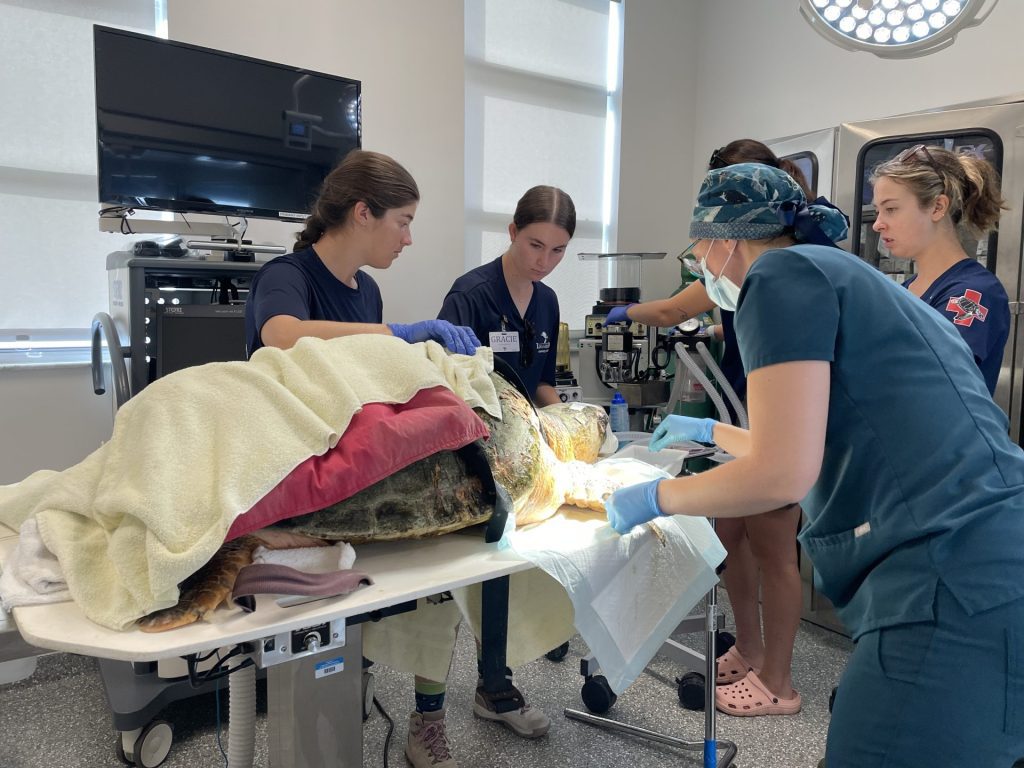
Plan Your Visit and Support LMC’s Sea Turtle Hospital in Florida!
Loggerhead Marinelife Center in Juno Beach, Florida, is one of the region’s most advanced marine conservation centers. As the first sea turtle hospital in South Florida to install an on-site CT machine, LMC is raising the bar in sea turtle care and diagnostics.
Thanks to a generous donation from The Cornelia T. Bailey Foundation, this cutting-edge technology allows the veterinary team to detect internal tumors, lesions, and other complications with greater precision than ever before. It often produces 3D images that improve treatment planning and outcomes.
This is especially critical for turtles suffering from fibropapillomatosis (FP), a debilitating virus that causes tumor growth and can be fatal if not treated. With the new CT scanner, LMC is now one of only nine hospitals in Florida equipped to care for FP patients, expanding their ability to rehabilitate and release more turtles back into the wild.
When you visit or support Loggerhead Marinelife Center, you’re not just stepping into an exhibit—you’re joining a network of people and science working together to save one of the ocean’s most ancient and awe-inspiring species. From top-tier medical care to public education and conservation programs, your involvement fuels the future of sea turtle recovery.
Plan your visit, adopt a sea turtle, or donate today at Loggerhead Marinelife Center to help these incredible animals thrive for generations.