- Explore Research -
The Research Department at Loggerhead Marinelife Center (LMC) annually monitors nesting behavior for three species of sea turtle found nesting on an 8.5 mile stretch of beach from March-October during sea turtle nesting season in south Florida. Their survey area runs from from the Jupiter Inlet Colony south to John D. MacArthur Beach State Park. This stretch of beach is the Western Hemisphere’s most densely nested beach for the loggerhead sea turtle and is a regionally important area for the leatherback and the green turtle.
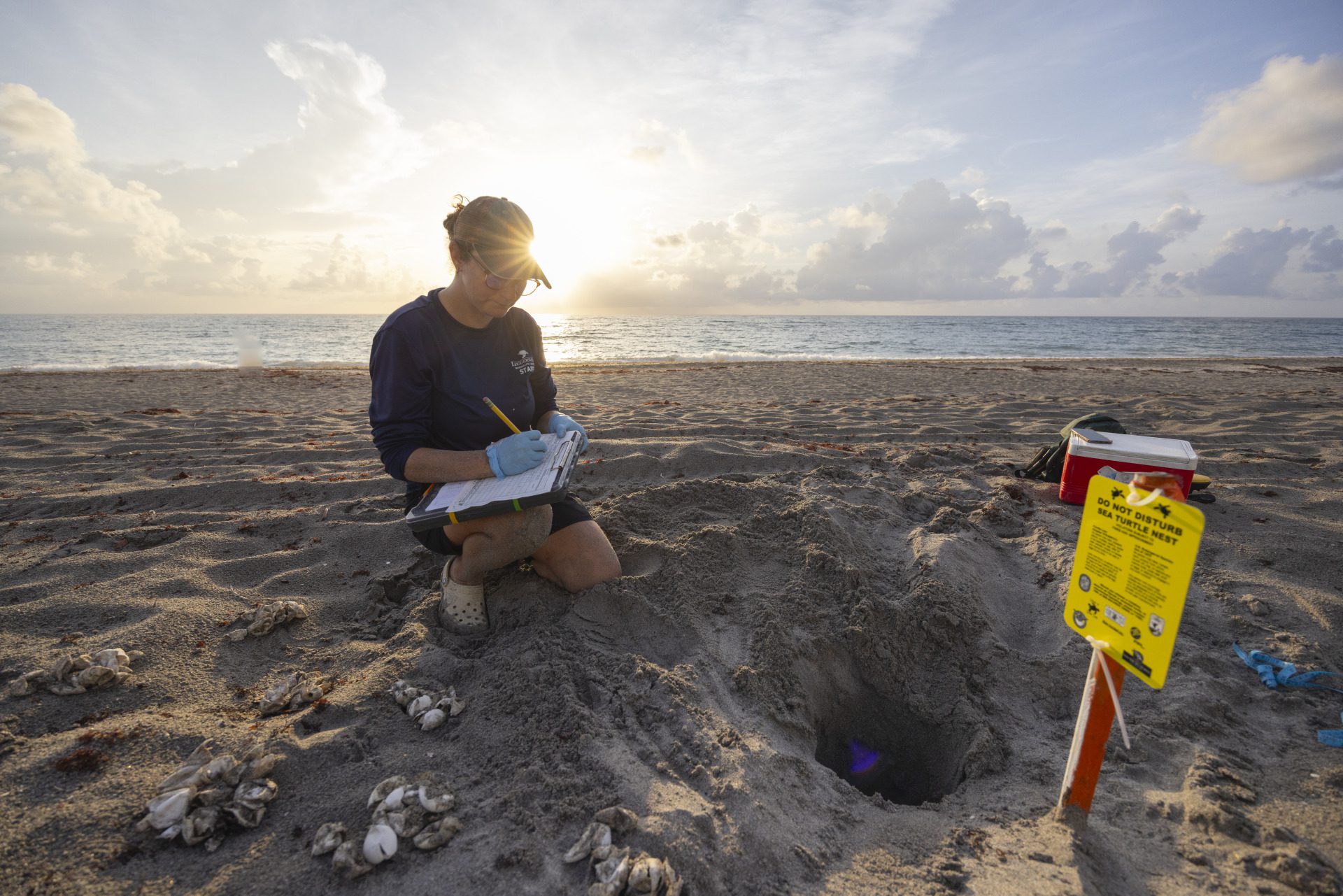
LMC’s Research Department has an extensive dataset dating back to 1979, consisting of standardized nesting data. The program officially began when LMC founder Eleanor Fletcher received her permit from the state of Florida in the early 1970s. This dataset is invaluable to scientists and local, national, and international coastal managers, as it can be used to form the basis for conservation decisions to promote the recovery of sea turtle populations.
Information collected includes:
- Nest and false crawl (i.e., when a turtle comes onto land and returns to the ocean without laying eggs) counts
- GPS locations of all crawls
- Nest inventory data/reproductive success
- Sand and nest temperature data
- Mapping of escarpments, high water line and vegetation line


Sea Turtle Nesting FAQs
Nesting Season Dos and Don'ts
You can help protect sea turtles by following these guidelines.
Nesting takes place on local South Florida beaches annually from March 1 – October 31
Keep Your
Distance
Never approach or touch a nesting sea turtle. Keep your distance, remain quiet and keep all lights off (including flash photography & cell phones).
Let Hatchlings
Emerge
If you see hatchlings on the beach, allow them to crawl to the ocean on their own. Do not remove or dig hatchlings out of a nest.
Avoid Certain
Areas
Use designated access points and avoid walking on the dunes or beach vegetation.
Minimize
Light
Keep lights off while not in use and close your blinds at night to avoid adding to overall sky glow.
Take Your
Belongings
Remove obstacles such as beach chairs, tables, and umbrellas before dark. Properly throw away trash.
Fill in
Holes
Only dig holes below high tide line, in the hard-packed sand to avoid incubating sea turtle nests. Fill all holes back in and knock over sand castles to reduce obstacles.